
Starting an import export business can feel like a big task, and many people find it tricky. You might wonder about all the rules or where to even begin. But it doesn’t have to be that hard!
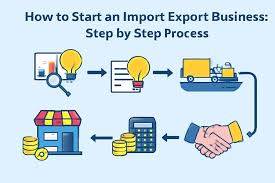
We’re going to show you how to start import export business step by step. It’s simpler than you think, and we’ll guide you through everything. Get ready to learn the easy way.
Key Takeaways
- You will learn the basic steps to begin an import export business.
- Understand the importance of market research for finding products.
- Discover how to handle necessary legal and registration steps.
- Learn about finding suppliers and buyers for your business.
- Get insights into managing finances and payments.
- Understand logistics and shipping in international trade.
Understanding The Import Export Business Basics
The import export business involves buying goods from one country and selling them in another. Importing means bringing goods into your country. Exporting means sending goods out of your country to sell elsewhere.
Many people are curious about how to start import export business because it offers global opportunities. It lets you access products not available locally and sell your country’s unique items worldwide. This can lead to good profits and business growth.
For beginners, the challenge often comes from not knowing where to start or what paperwork is involved. There are many details to consider, from finding the right products to making sure everything is legal. This might seem overwhelming at first.
But with clear guidance, you can break it down into manageable steps. We’ll cover the essential parts so you feel confident about your first move.
What Is Import Export Business
An import export business is essentially international trade. It’s about facilitating the movement of goods across national borders. When you import, you are the buyer in the international transaction, bringing products into your domestic market.
When you export, you are the seller, sending your products to customers in other countries.
This type of business can involve many different kinds of products, from small consumer goods to large industrial equipment. It requires a good understanding of global markets, logistics, and trade regulations. The potential for profit is high because you can often find better prices for goods abroad or sell unique items at a premium in other markets.
Why Start An Import Export Business
Starting an import export business offers several advantages. You can tap into a much larger customer base than a purely domestic business. This means more potential sales and revenue.
You can also source products at lower costs from countries where they are produced more cheaply, increasing your profit margins.
Furthermore, it allows you to diversify your business. You are not solely reliant on your local economy. If your domestic market is slow, international markets might be booming.
It’s also a way to bring unique or in-demand products to your home country that consumers might not otherwise have access to.
The Role Of A Trader
As an import export trader, your primary role is to connect buyers and sellers across different countries. You act as an intermediary, facilitating the entire transaction. This involves identifying market needs, sourcing products, negotiating prices, and managing the logistics of international shipping.
You are responsible for ensuring that all legal requirements are met, such as customs declarations and permits. A good trader also builds strong relationships with suppliers and buyers, which is key to long-term success. Your expertise in international markets and trade processes is what makes your business valuable.
Finding Your Niche And Products
The first big step in starting your import export business is deciding what you want to trade. This means finding a product or a group of products that you can sell profitably. It’s not just about picking something you like; it’s about finding something the world wants and that you can get reliably.
This part requires good research. You need to look at what’s popular in other countries and what might be missing. It’s also about finding products that have a good profit margin.
We will guide you through how to do this research effectively.
Market Research For Import Export
Market research is super important. It helps you find out what products are in demand in other countries. You also need to see if you can get these products for a good price.
This research prevents you from wasting time and money on things that won’t sell.
You can look at online marketplaces like Alibaba or Global Sources to see what’s being traded a lot. Trade shows are also great places to discover new products and trends. Think about what problems your product can solve for people in another country.
This makes your product more desirable.
Identifying Profitable Products
To find profitable products, you need to consider a few things. First, look at the cost of buying the product versus the price you can sell it for in the target market. This difference is your potential profit.
Remember to factor in shipping, customs duties, and other fees.
Also, think about the competition. Is the market already flooded with this product? If so, can you offer something better, cheaper, or more unique?
Niche products that cater to a specific interest can often be very profitable because there’s less competition. Consider products that are lightweight and not too fragile, as this makes shipping easier and cheaper.
Examples Of Successful Import Export Products
Many everyday items are great examples of successful import export products. For instance, consider handcrafted textiles from India. These are often exported to Western countries where consumers appreciate their unique designs and quality.
Similarly, electronics from China are exported globally due to efficient manufacturing.
Specialty foods, like olive oil from Italy or coffee beans from Colombia, are also popular exports. These products leverage a country’s natural resources and culinary heritage. The key is that these products have a demand beyond their origin country and can be sourced reliably.
Setting Up Your Business Legally
Before you start buying and selling across borders, you need to make sure your business is set up correctly. This means handling all the legal stuff and registrations. It’s like building a strong foundation for your company.
Doing this properly from the start saves you from many headaches later on.
We will break down the essential legal steps. This will help you feel prepared and confident about your business setup. It’s not as complicated as it sounds when you go through it step by step.
Business Registration And Licenses
The first legal step is to register your business. This usually involves choosing a business structure, like a sole proprietorship, partnership, or limited liability company (LLC). Each has different legal and tax implications.
You’ll need to register your business name with your local government.
Depending on the products you trade and the countries you work with, you might need special import or export licenses. For example, certain goods like food, medicine, or electronics may require specific permits. Research the regulations in your country and the countries you plan to trade with.
This ensures you operate legally and avoid penalties.
Understanding Customs And Tariffs
Customs are government agencies that control the flow of goods across borders. They check what’s coming in and going out of a country. Tariffs are taxes or duties imposed on imported goods.
These tariffs can significantly increase the cost of your products.
It’s vital to understand how customs procedures work in both your home country and your target markets. You need to know the correct way to declare your goods. You also need to know how tariffs are calculated and paid.
This information is usually available on your country’s customs website.
Incoterms Explained
Incoterms are a set of international rules for interpreting trade terms of sale. They clarify the duties, costs, and risks involved in the international delivery of goods from sellers to buyers. They help avoid misunderstandings and disputes.
Some common Incoterms include EXW (Ex Works), where the seller makes the goods available at their premises; FOB (Free On Board), where the seller delivers goods on board the vessel nominated by the buyer; and CIF (Cost Insurance Freight), where the seller pays for the cost, insurance, and freight to bring the goods to the destination port.
Using the correct Incoterm is crucial for defining who is responsible for shipping, insurance, and customs clearance at each stage of the delivery process. This clarity helps in accurate pricing and risk management.
Finding Suppliers And Buyers
Once your business is legally set up and you know what you want to trade, the next challenge is finding people to work with. This means finding reliable suppliers who can provide your products and buyers who want to purchase them. Building a strong network is key to success in import export.
We’ll explore effective ways to find these partners. This part is all about connecting with the right people to make your deals happen. It’s an exciting stage of building your business relationships.
Sourcing Reliable Suppliers
Finding trustworthy suppliers is critical. You want suppliers who provide quality products consistently and on time. Start by researching online B2B platforms like Alibaba, DHgate, or Global Sources.
These platforms list thousands of manufacturers and wholesalers.
Attend international trade fairs and exhibitions related to your product niche. This is a great way to meet suppliers face-to-face, inspect their products, and build rapport. Always ask for samples before placing a large order.
Also, check supplier reviews and ask for references. Building a good relationship with your supplier will lead to better prices and service.
Connecting With International Buyers
To find buyers, you can use similar strategies. Online marketplaces can also help you reach potential customers globally. Consider listing your products on platforms that cater to international buyers.
Developing a professional website for your business is also essential. It serves as your online storefront.
Networking is very important. Attend industry events and trade shows in your target countries. Join online business forums and social media groups related to your industry.
Consider working with trade agents or distributors in your target markets. They often have established networks of buyers.
Building Business Relationships
Strong relationships are the backbone of international trade. Be professional, responsive, and transparent in all your dealings. Clear communication is key, especially when dealing with different time zones and cultures.
Understanding cultural differences can prevent misunderstandings.
Always honor your commitments. If you promise to deliver by a certain date, do your best to meet it. Building trust takes time, but it leads to repeat business and loyal partners.
This long-term approach is what truly makes an import export business sustainable and profitable.
Managing Finances And Payments
Money matters are a big part of any business, and import export is no different. You need to know how to pay your suppliers and how to get paid by your buyers. Managing your finances wisely is crucial for your business to grow and stay healthy.
We’ll cover the basics of handling money in international trade. This will help you feel more secure about the financial side of your operations. It’s about making sure the money flows smoothly.
Payment Methods In International Trade
Several payment methods are used in international trade, each with different levels of security. Common methods include bank transfers (wire transfers), letters of credit (LCs), and trade finance. For smaller transactions, services like PayPal or Wise (formerly TransferWise) might be used.
A Letter of Credit is often preferred for larger transactions as it provides security for both the buyer and the seller. The buyer’s bank guarantees payment to the seller once certain conditions are met, like shipment of goods.
Calculating Costs And Profit Margins
To calculate your profit, you must know all your costs. This includes the cost of the goods, shipping fees, insurance, customs duties, taxes, and any other operational expenses. Then, you subtract these total costs from the selling price to find your profit.
Profit margin is usually expressed as a percentage. It’s calculated as (Profit / Revenue) x 100. For example, if you sell a product for $100 and your costs were $70, your profit is $30.
Your profit margin is ($30 / $100) x 100 = 30%.
It is essential to be realistic with these calculations. Underestimating costs can lead to unexpected losses. Accurate cost analysis ensures your pricing strategy is sound and your business remains profitable.
Currency Exchange Rates
When trading internationally, you will often deal with different currencies. Exchange rates fluctuate daily. This means the cost of your goods or the amount you receive in payment can change.
You need to be aware of these fluctuations.
You can use forward contracts or currency options to hedge against unfavorable exchange rate movements. This helps lock in an exchange rate for a future transaction, reducing financial risk. Many businesses use online currency converters or work with financial institutions that specialize in foreign exchange.
Logistics And Shipping
Moving goods from one country to another is a big part of the import export process. This involves planning and managing how your products will be shipped. Getting this right ensures your goods arrive safely and on time, which makes your buyers happy.
We will look at the basics of international shipping. This section will help you understand how to get your products from your supplier to your customer, no matter how far apart they are.
Modes Of International Shipping
There are several ways to ship goods internationally. The most common are ocean freight, air freight, and land transport (trucks or trains). Each has its own advantages and disadvantages.
Ocean freight is the cheapest but slowest method, suitable for large, non-urgent shipments. Air freight is the fastest but most expensive, best for high-value or time-sensitive goods. Land transport is used for trade between neighboring countries.
Working With Freight Forwarders
Freight forwarders are companies that help you arrange shipments. They manage the logistics, including booking space on ships or planes, handling customs documentation, and coordinating with carriers. They can be incredibly helpful, especially for beginners, as they have the expertise and networks to manage complex shipping processes.
A freight forwarder can also help you choose the most cost-effective shipping method. They can consolidate shipments from multiple suppliers, saving you money. They also handle the necessary paperwork, which can be complicated.
Packaging And Documentation
Proper packaging is essential to protect your goods during transit. Products must be packed securely to withstand the rigors of international shipping, including handling, stacking, and changing environmental conditions. Use sturdy boxes, appropriate cushioning materials, and clear labeling.
Accurate documentation is also vital. This includes the commercial invoice, packing list, bill of lading (for sea freight) or air waybill (for air freight), and certificates of origin. Errors in documentation can cause delays at customs or even lead to your shipment being rejected.
Common Myths Debunked
Myth 1: You Need A Huge Amount Of Money To Start
It’s a common belief that you need a massive capital investment to launch an import export business. This is often not true. While some businesses require significant startup funds, many import export ventures can be started with relatively modest capital.
This is especially true if you focus on niche products, dropshipping, or act as a middleman trader rather than holding large inventories.
Many successful import export businesses began small, with founders bootstrapping their operations. The key is smart planning, identifying low-cost market opportunities, and leveraging online platforms. Starting lean allows you to test the market and scale gradually as your revenue grows.
Myth 2: Import Export Is Too Complicated And Bureaucratic
The idea that import export is bogged down by excessive paperwork and complex regulations can be intimidating. While there are procedures to follow, they are manageable with the right approach. Many governments have resources available to help small businesses understand trade regulations.
Using services like freight forwarders and customs brokers can simplify the process significantly. They handle much of the complex documentation and navigation of regulations on your behalf. Focusing on one or two products and a few key markets at the start makes the learning curve much less steep.
Myth 3: You Need To Travel Extensively
While international travel can be beneficial for building relationships and understanding markets, it’s not always a prerequisite to starting and running an import export business. The digital age has made global communication and business management much easier.
You can connect with suppliers and buyers through online platforms, video calls, and email. Trade shows can be attended virtually or through representatives. Many successful traders manage their operations remotely, relying on technology and trusted partners on the ground.
Myth 4: You Must Have A Warehouse And Large Inventory
The traditional image of a trading business often includes a warehouse filled with goods. However, this is not the only way to operate. Many import export businesses today operate on a lean model.
This might involve dropshipping, where you don’t hold inventory yourself; the supplier ships directly to the customer.
Alternatively, you can work on a just-in-time inventory system or a pre-order model. This means you only purchase or arrange for goods to be shipped once you have a confirmed sale and payment from your buyer. This significantly reduces your upfront investment and risk.
Frequently Asked Questions
Question: How do I find out if a product is in demand overseas
Answer: You can research online marketplaces like Alibaba, Google Trends, and international trade reports. Look at what products are being exported and imported heavily by different countries to spot opportunities.
Question: What is the most important document for shipping
Answer: The commercial invoice is crucial. It details the goods, their value, and who is involved in the sale, and it’s needed for customs and payment processing.
Question: Do I need a special visa for import export business
Answer: Generally, you do not need a special visa for the import export business itself. You will conduct business from your home country. However, if you plan to travel abroad for business meetings or trade shows, you may need a business visa depending on the country’s entry requirements.
Question: How can I get paid safely by international buyers
Answer: Using secure payment methods like Letters of Credit (LCs) or secure online payment gateways with buyer protection is recommended. For smaller amounts, PayPal or other escrow services can also be used. Always clarify payment terms upfront.
Question: What are customs duties and how do they affect my pricing
Answer: Customs duties are taxes imposed on imported goods. They add to the cost of your product, so you must include them in your pricing calculations to ensure profitability. You can usually find duty rates on your country’s customs agency website.
Summary
Starting an import export business is achievable. You learned that finding the right products through research is key. Setting up your business legally with proper registration and understanding customs makes you compliant.
Finding reliable suppliers and buyers builds your network. Managing finances and choosing secure payment methods are vital. Finally, efficient logistics and shipping ensure timely delivery.
Follow these steps to begin your import export venture with confidence.